






















What makes UAE property management different
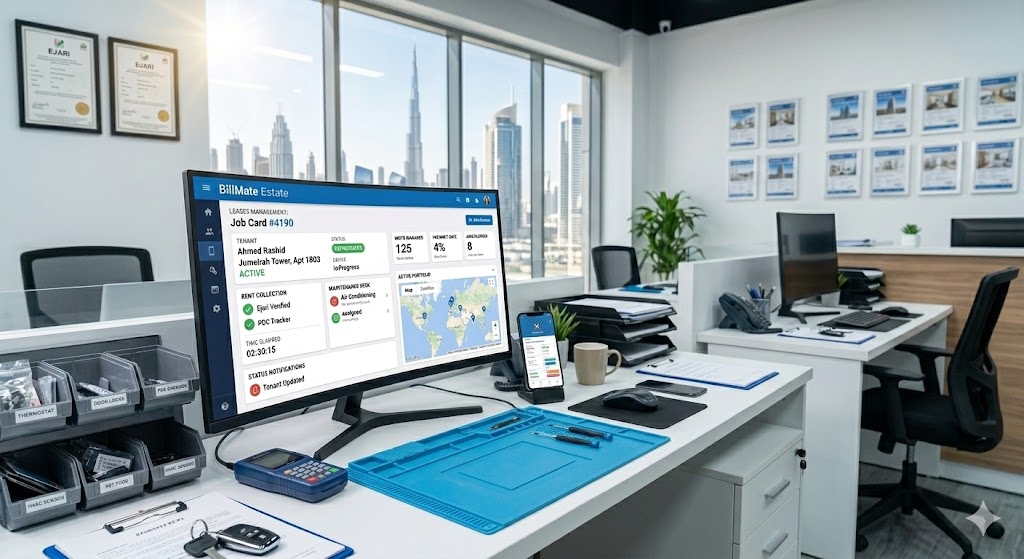
Rent in the UAE is often paid by post-dated cheques, tenancy contracts must be registered with the relevant authority, and renewals follow set notice periods. Managing this in spreadsheets works for a handful of units and breaks down quickly after that.
PDC tracking
Post-dated cheques need careful handling. Software should record each cheque, show upcoming deposit dates, flag bounced cheques and keep a clear ledger per tenant, so nothing is deposited late or forgotten.
Tenancy registration and lease records
Tenancy contracts are registered through Ejari in Dubai and Tawtheeq in Abu Dhabi. Your system should keep contract dates, renewal reminders and registration references together with the tenant's documents, so renewals are never a last-minute scramble.
Invoicing and VAT
VAT treatment differs by property type. Residential rent is generally exempt, while commercial leases are generally standard-rated at 5%. Service charges and other fees add more cases. Set the rules per unit and confirm them with your tax adviser so invoices are correct by default.
Maintenance and owner reporting
Tenants should be able to raise maintenance requests that are assigned, tracked and costed per unit. Owners expect monthly statements showing income, expenses and net profit. Automating these frees property managers for real work.
BillMate Estate brings leases, PDCs, maintenance and owner reports into one platform.
See BillMate Property Management in action
Our Abu Dhabi team can walk you through the system on a short call or on site.